
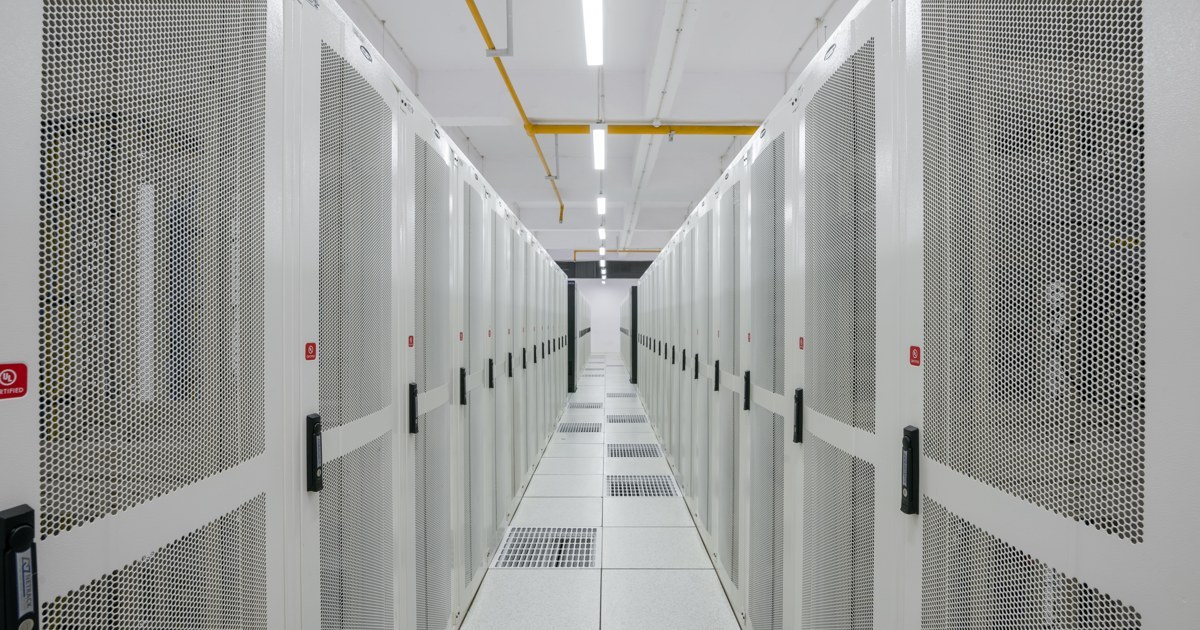
On November 12, 2026, South Korea's HyperAccel announced plans to show an eight-LPU server at SC26 and remotely demonstrate inference on operational servers in Korea. The company also described internal comparisons with NVIDIA RTX PRO 6000 Blackwell Server Edition systems. These are vendor-reported results, not independently verified benchmarks; the release does not disclose every setting or commercial condition needed to reproduce them.
The announcement is a useful prompt to assess the whole system: supported models, latency, power, software and support. A demonstration does not establish regional availability, price or delivery terms.
What was announced
In its November 12 announcement, HyperAccel describes an eight-LPU server and a remote inference demonstration. SC26 in Chicago is the demonstration venue; the operational servers used for the remote presentation are in Korea.
The company cites 250 W per LPU card and 600 W per RTX PRO 6000 Server Edition card in its comparison. Neither number should automatically be treated as the complete server's measured power under every workload. The release does not provide a full bill of materials and all measurement settings for both test systems.
| Question | What the company states | What remains to verify |
|---|---|---|
| System | An eight-LPU server will be shown | Exact configuration and shipping status |
| Demonstration | Remote inference on servers in Korea | Available models, settings and measurements |
| Card power | 250 W per LPU in its comparison | Whole-system measured consumption |
| Comparison | Internal test against RTX PRO 6000 Server Edition | Reproducible method and independent results |
| Delivery | International partnership plans | Price, availability and regional service |
The event is described as taking place November 17–19. That date does not establish when a commercial server will be available in a particular market. Hardware running for a demonstration does not prove stock availability or support for every model under every customer configuration.
Reading the RTX PRO 6000 claim
HyperAccel claims its internal tests achieved over 3.5 times the token throughput per watt and per dollar of its comparison system powered by RTX PRO 6000 Server Edition. The release names Qwen3-32B and Llama3-70B but does not specify which tokens are included in that metric or disclose every reproducibility detail. Treat this as a vendor claim, not proof of the same advantage for all deployments.
Ask for the complete configuration of both servers, accelerator counts, model and weight format, input and output lengths, concurrency, batching and driver versions. Check whether power was measured at each card or at the system input. A per-dollar figure also depends on complete system pricing, operating period, utilization and other assumptions. Without them, the ratio cannot be independently applied to your project.
NVIDIA describes RTX PRO 6000 Server Edition for graphics, compute and video as well as AI inference. A platform focused on language inference may suit a different workload mix. Compare the features your organization actually needs, rather than declaring a universal winner from one test. NVIDIA's GPU page describes the card, not the price of a complete server.
Cards versus complete systems
Eight cards at the stated 250 W equal 2,000 W for accelerators. Eight cards at 600 W equal 4,800 W. This multiplication uses the comparison's stated card values; it is not a measurement of complete systems or actual energy use. CPUs, memory, storage, network, fans and power conversion add load, and actual operating limits depend on the configuration.
For illustration, a hypothetical server drawing 3 kW continuously for 24 hours uses 72 kWh. That is 3 × 24, not a measurement of HyperAccel hardware. To estimate energy cost per completed task, use a system-level meter over a defined period, completed requests and your contracted tariff. Power in kilowatts and energy in kilowatt-hours are different quantities.
Useful output matters too: a server consuming less power does not necessarily use less energy for the same completed workload if it also handles fewer tokens. Compare energy per task at equivalent output quality and acceptable latency.
A practical evaluation protocol
Fix the request set, input and output lengths, model, weights and quality target. Record serving software and batching. If numerical precision differs, evaluate output quality and disclose that difference; a faster answer that fails the quality requirement is not equivalent.
For interactive services measure time to first token and tail latency across several concurrency levels. For batch jobs record completed requests, failures and total completion time. State whether token throughput includes input tokens, output tokens or both, and where power is measured. These details make an experiment reproducible.
Also check application and operating-system compatibility. Identify who supplies updates, resolves failures and provides service. Migration and staff training can affect the complete project cost and depend on the actual deployment.
After the demonstration
A demonstration establishes that a selected scenario can run; it rarely covers every future customer workload. Request the exact configuration and repeat the evaluation with your own model. For a remote test, clarify whether timing includes network transfer, queuing, input processing and generation. Label synthetic requests as synthetic and ask whether resources are dedicated or shared. Check regional maintenance arrangements before including a system in a final procurement plan.
Questions to ask a supplier
- Which exact server and accelerator count are offered?
- Are the model, weight format and deployment environment supported?
- What latency is measured at the expected concurrency and output quality?
- What whole-system power and cooling does the installation require?
- What warranty, updates, spares and regional service are available?
- Can the stated test be reproduced before acceptance?
Explore the AI server catalog or describe your workload to discuss available infrastructure. HyperAccel's announcement is not an offer from AI Server Lab; availability and commercial terms require confirmation.