
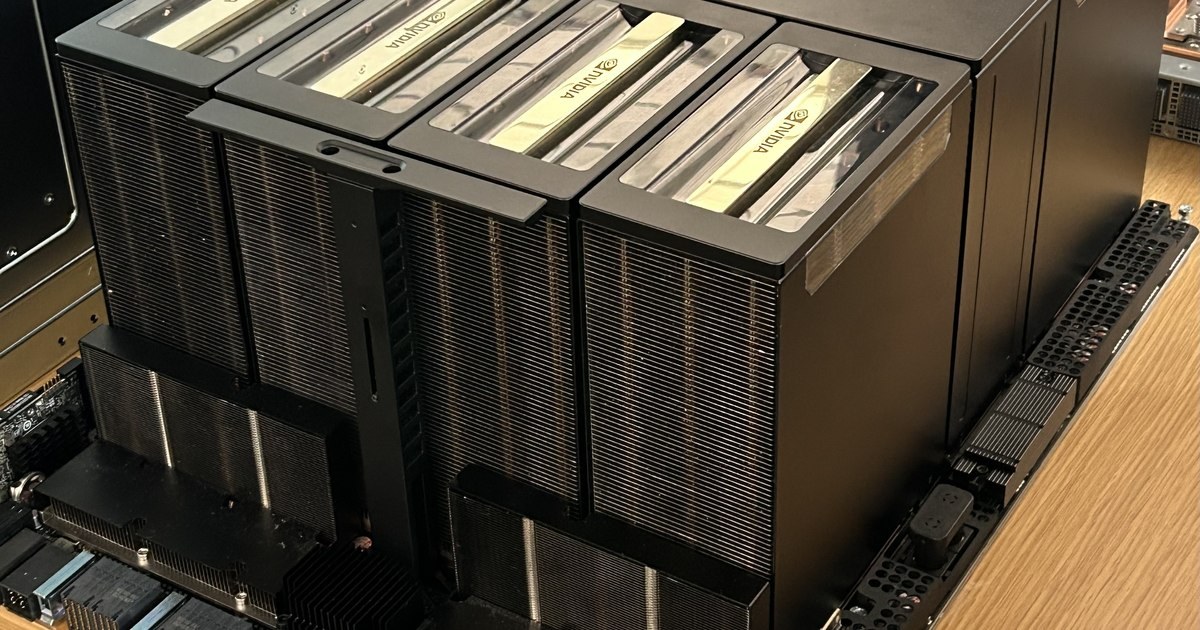
NVIDIA's DGX B300 firmware release 26.11.1 adds Redfish firmware updates for certain NVMe drives and fixes a range of BMC issues, including critical-sensor handling and telemetry. Before an update, verify the exact system and component compatibility, arrange workload protection and plan downtime. Depending on the components updated, activation can require a BMC reset, a system cold reset or an AC power cycle.
This is a preparation guide based on NVIDIA's documentation, not a universal update command. Follow the current release notes and procedures for the exact hardware and installed version, and arrange a recovery route with the support provider before making changes.
What NVIDIA lists in 26.11.1
The 26.11.1 release notes describe an updated motherboard-tray package and support for firmware updates through Redfish for Micron 9550 Gen5 E1.S and SK hynix PE9010 M.2 SSDs. This does not mean the package is appropriate for every drive from those vendors: check exact model, firmware and supported component lists for your installation.
The BMC fixes include improved handling of overheating, fan ramp-up when a critical sensor reports unavailable, and corrections to CPU1 temperature and ConnectX telemetry. NVIDIA also lists a fix for CVE-2026-98432. Assess exposure and applicability against official security guidance and the versions actually installed.
NVIDIA explicitly states that the release contains no GPU-tray fixes. Do not infer a GPU performance improvement or assume that this particular package fixes every NVLink issue. The release notes recommend nvfwupd 2.1.3 or later; confirm the tool and firmware package requirements in the current documentation.
Distinguish the system from its GPU
DGX B300 is a complete system. NVIDIA describes separate motherboard and GPU trays containing independently updatable components. A release number does not imply that every controller, GPU or network device changed in the same way.
Do not automatically apply a DGX B300 package to an HGX B300 server supplied by another vendor. The system integrator may use different BMC, BIOS and hardware procedures. Obtain instructions for the exact server SKU from its manufacturer.
Similarly, a fix for a ConnectX telemetry issue does not establish that every sensor reading in every installation is now correct. Check the actual values and expected operating ranges after the update.
Build the pre-change inventory
Record the system model and serial number, current component firmware versions, drive models, DGX OS and driver versions, network adapters and present health. Preserve relevant BMC event logs, temperatures, storage errors and diagnostic output. A baseline helps distinguish new issues from faults that existed before maintenance.
NVIDIA's version-inspection procedure describes comparing installed component versions with a package using nvfwupd. Keep BMC access on a protected management network. Do not place passwords in shared logs, tickets or screenshots, and do not reuse demonstration credentials from examples as production credentials.
Read both the installed and target release notes. Verify supported upgrade paths, intermediate-version requirements and known issues. NVIDIA notes that every BMC firmware downgrade requires clearing the Redis database through IPMI because of database format incompatibility. A generic “roll back if needed” is therefore not a sufficient recovery plan: agree the exact procedure and consequences with support first.
Plan activation and downtime
In the firmware update guide, NVIDIA distinguishes activation methods. A BMC component can require a BMC reset; BIOS, PCIe components or the GPU tray can require a system cold reset; certain EROT and CPLD components require an AC power cycle. Apply the requirement for the components actually updated, rather than performing every type of reset indiscriminately.
A BMC reset and a complete power interruption have different operational consequences. Coordinate with workload, network and facilities owners. Confirm that authorised staff and managed PDUs can perform the required power cycle if it is needed. Physical work and power isolation should follow the facility's approved procedures.
As an illustration, allow 25 minutes for preparation, 70 for application, and 35 for activation and validation: 130 minutes before contingency. These are hypothetical planning inputs, not a measured duration for 26.11.1. Use the current package documentation and your own maintenance experience to estimate the real window and reserve time for recovery.
Checks before returning workloads
After activation, compare installed versions with the intended versions. Confirm that the system detects its GPUs, NVSwitches, network adapters and drives, and review the BMC event log for new critical messages. Verify CPU and network-device temperatures, fan telemetry and management access from permitted addresses.
Run the agreed device health checks and a small representative workload. In a cluster, also validate connectivity and driver compatibility. Return the node to the scheduler after those checks pass, and watch telemetry while gradually restoring traffic. If an error appears, preserve logs and use the support escalation route agreed before the change.
Define success criteria in advance: system boots, expected devices are present, management remains accessible, temperatures are within the documented limits and the representative workload completes correctly. A short observation period without a previously intermittent symptom does not prove it can never recur.
Takeaway
The 26.11.1 release addresses management and certain supported NVMe devices. It is not a substitute for GPU health checks and is not automatically valid for every B300-based server. Inventory first, understand downgrade constraints, plan activation and verify the system after maintenance.
See the DGX B300 catalog page or send workload and facility requirements via the contact form. Configuration, support, availability and delivery terms require confirmation.