
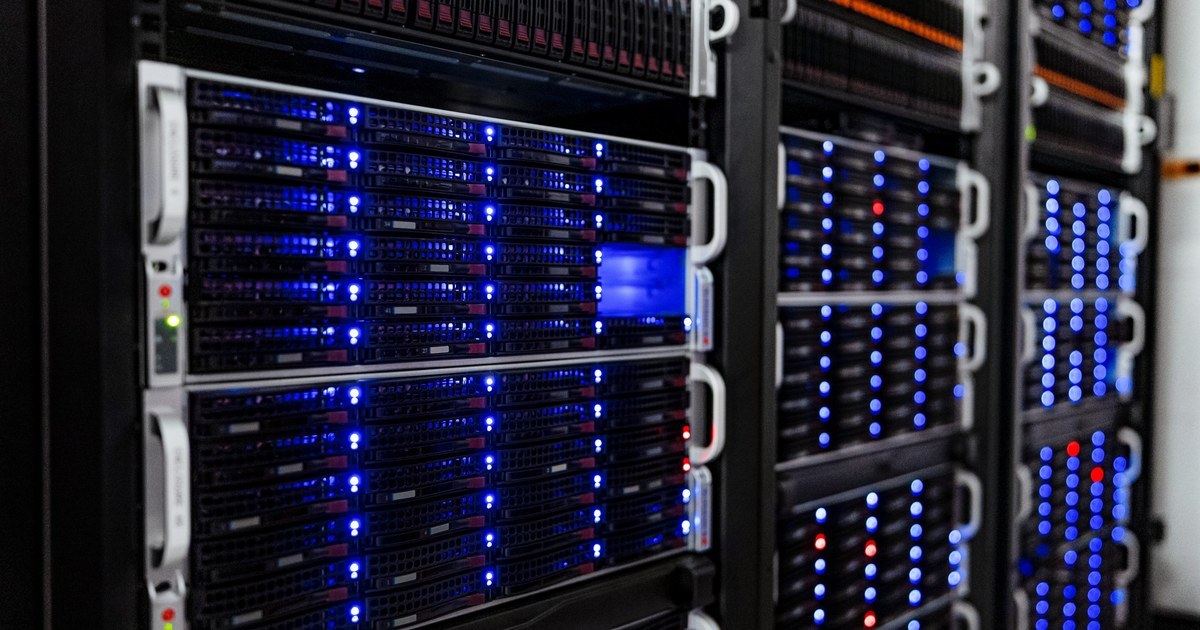
On November 13, 2026, AEWIN announced plans to show several servers at SC26 in Chicago. The lineup includes the 1U BG18-A10710 for two single-width GPUs, the 2U BG28-A10710 with four double-width GPU slots, and the 4U BG48-A20813 for eight double-width GPUs. These are specifications in a vendor announcement, not independent performance results or proof that a particular configuration is available in your market.
The practical decision is broader than GPU count. Buyers need to establish which cards fit, how they connect to CPUs, what the complete system draws at the wall, and who provides the necessary cooling. The comparison below separates what AEWIN says from the details that still require a vendor quotation or site survey.
What the announcement confirms
AEWIN plans to exhibit the systems on November 17–19, 2026. Its announcement describes a portfolio using AMD EPYC 9006 SP7 processors and next-generation connectivity, but does not provide a complete qualified GPU, PSU and cooling configuration list for each model.
| Server | Announced chassis and GPU capacity | Ask before specifying |
|---|---|---|
| BG18-A10710 | 1U; two single-width GPUs up to 600 W each | Qualified SKUs, power inputs and two-phase cooling components |
| BG28-A10710 | 2U; four double-width FHFL PCIe 6.0 x16 GPU slots, up to 600 W per GPU | Exact GPU compatibility, PCIe topology and cooling configuration |
| BG48-A20813 | 4U; up to eight double-width FHFL GPUs | Per-GPU power limit, CPU and chassis configuration, qualified accelerators |
The same announcement discusses storage servers and a rack-scale two-phase direct-liquid-cooling solution. Its claim of up to 200 kW of cooling per rack relates to that described infrastructure. It does not imply that each server consumes 200 kW or that an existing site can accommodate the rack without engineering work.
What rack height tells you
Rack units describe equipment height. Dividing the headline GPU counts by their respective heights yields two GPUs per U for all three examples: 2/1, 4/2 and 8/4. This is arithmetic, not installed rack density. It excludes switches, power distribution, service clearances and restrictions that may prevent filling every U with servers.
Card width matters. The announcement specifies single-width accelerators for BG18 but double-width devices for BG28 and BG48. A double-width GPU is not automatically compatible with the 1U model even if its quoted power is below 600 W. Check the qualified GPU list, physical dimensions, power connectors and cooling requirements of the specific chassis.
Rack height does not specify chassis depth either. Obtain rail-to-rail depth, front and rear clearance, cable bend radius, rail travel and service access. If liquid lines are required, confirm their route and bend limits when the server is pulled forward for maintenance.
A limited power calculation
For BG28, four GPUs at the announced maximum of 600 W each add up to 2,400 W of accelerator nameplate power. For BG18, two such GPUs add up to 1,200 W. Neither figure is a complete server power specification or a measurement. CPUs, DIMMs, SSDs, networking, fans, pumps and power-conversion losses are outside that calculation. The cited announcement does not give a per-GPU limit for BG48, so do not assume 600 W for it without further documentation.
As a separate illustrative example, suppose a supplier confirms that a complete configured system averages 3 kW at its input under a defined workload. Over 24 hours at that steady average it uses 3 × 24 = 72 kWh. That is an explanation of the calculation, not an AEWIN measurement. Use measured energy and the applicable tariff for operating cost; use the qualified maximum and the site electrical design for circuit and redundancy planning.
Ask the supplier for PSU quantity, supported input voltages and the allowed load when a PSU or feed fails. Adding the nameplates of two supplies does not by itself establish that either can support the complete server after the other fails.
Cooling is a system-level question
AEWIN describes BG18 with integrated two-phase direct liquid cooling. A workable installation needs more than a heat figure: request the allowed fluid, coolant distribution equipment, connections, temperature and pressure boundaries, monitoring and service procedures for the offered configuration. The brief announcement does not establish all of these parameters.
Do not assume that BG28 and BG48 have the same cooling arrangement as BG18. Ask for the exact build, qualified GPU variant and facility interface. Define responsibilities for the CDU, leak monitoring, coolant quality, shutdown and replacement work. A rack-level maximum from a press release is not a substitute for a facility design.
Ask what fraction of heat goes to the liquid loop and what remains in the air from memory, storage and PSUs. Without that thermal balance, the residual load on room ventilation cannot be sized accurately.
Compare performance on the workload
For inference, specify the model and weights version, numerical precision, input and output lengths, and expected concurrency. When a model fits on one GPU, compare independent replicas with a supported distributed deployment. When it does not fit, establish whether the inference engine can split the model and how its communication maps onto the actual GPU topology.
For training, document the dataset, distribution method, global batch and checkpoint volume. Request a diagram of GPU-to-CPU and PCIe-switch connectivity. The number of slots alone does not reveal the complete topology or predict scaling. Compare time to complete the same useful work and capture GPU, network and storage utilization under equivalent settings.
For interactive inference, record time to first token, generation rate, tail latency and errors at multiple concurrency levels. Aggregate tokens per second can look attractive while individual users wait in a queue. State which tokens are included, how quality is checked, and whether measurements cover preprocessing and network time.
Request checklist
- Exact chassis and qualified GPU SKUs, dimensions and per-card power limits.
- CPU, GPU, memory, storage and network components in the proposed build.
- PCIe and inter-GPU topology, drivers and supported software versions.
- Complete system input power, PSU redundancy and electrical requirements.
- Cooling configuration, site interface, thermal balance and maintenance responsibilities.
- Acceptance workload, warranty, spare parts and verified terms for your region.
AEWIN's announcement establishes a planned demonstration, not a specific price or delivery commitment in any market. Explore the AI server catalog or describe your workload to discuss the appropriate class of system. Configuration and commercial terms require separate confirmation.